If you feel that DBS is a good option for your movement disorder, please ask your GP or Neurologist to complete the referral form and forward the signed form to mahantpracticenurse@gmail.com.
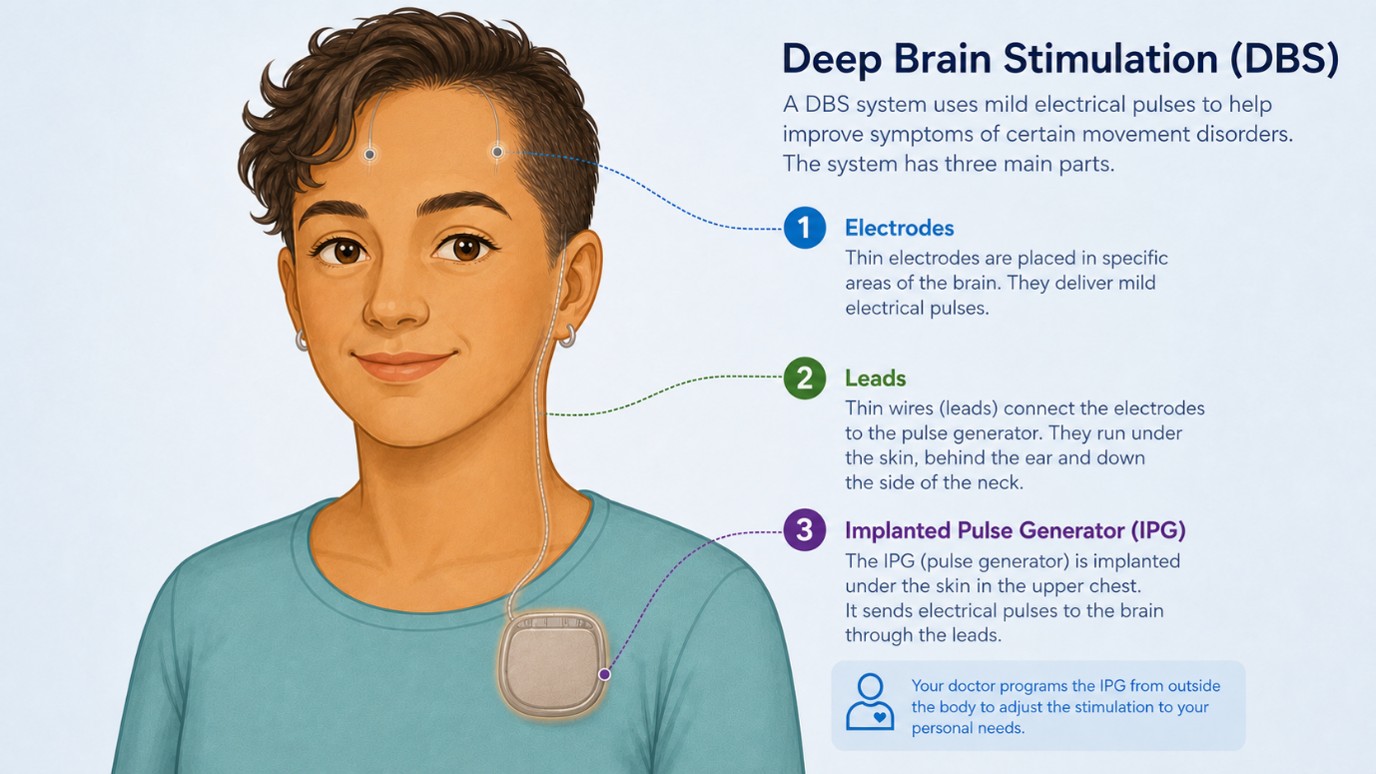
We take a patient-centred whole person approach. We have developed a comprehensive work-up process to address several important questions to inform your decision whether DBS is right for you.
These include –
- What is the diagnosis?
- How well does this condition respond to DBS?
- Have I considered treatment options other than DBS?
- Do I have issues that could affect the potential benefits or risks of DBS?
- What can I do to minimise the risks and maximise the benefits?
- Do I have appropriate goals and expectations?
- Are there any special considerations for me, such as my goals, expectations or lifestyle factors?
- Are there risks that are particularly relevant to me, including my health issues, goals, lifestyle, or occupation?
The work-up will include consultations with the DBS neurologist, neurosurgeon, psychiatrist and nurse. We will complete rating scales to document symptom severity, quality of life.
Once a decision has been made, your surgeon will discuss possible dates for surgery with you.
You will probably stay in hospital for 3-10 days, depending on your condition and several other factors. While you are in hospital, you and your support people will have several responsibilities.
These include knowing -
- Your new medication schedule
- How to use your DBS remote control, including why and when to use it
- How to care for your surgical wounds
- Your follow-up appointment details
- What to expect in the coming weeks and months
- Who to contact if unexpected issues arise
After going home, it can be difficult to remember what to do when something happens, even when you have already been given the information. You can empower yourself by keeping notes in words that make sense to you. Keep these notes somewhere safe but easy to access. This can help you feel more prepared, proactive and in control.
It can take several appointments over many months to achieve the best results from DBS. It is important to be patient and to keep in mind what DBS can and cannot do for you.
Roles of DBS Team members
It is a privilege to work within a highly specialised team dedicated to achieving the best possible outcomes for you. The team members involved in your care may vary depending on your individual circumstances. The DBS at Westmead started in 2006, and since the first case we have been constantly reviewing outcomes and processes.
The Team has evolved over time, with an ongoing commitment to improvement, including staying current with the latest medical literature. We are the major centre in NSW for training Neurologists in DBS.
See below for some of key team members and what they do, along with examples of individuals within the Team. The team members involved in your care may vary depending on your individual circumstances. You may also encounter other healthcare professionals not listed here, including anaesthetists, MRI and CT radiographers, physiotherapists, occupational therapists, and speech pathologists. Delivering DBS care is a collaborative effort involving a wide multidisciplinary team.
DBS work-up coordinator – Your central point of contact
- Provide information and assist in answering your questions
- Coordinate and organise the DBS work-up
- Review your goals, expectations, markers of success
- Support and guide you through the DBS journey
DBS nurse (Nurse Practitioner, Clinical Nurse Consultant)
- Provide education on DBS and other treatment options
- Perform appropriate clinical rating scales and videos
- Conduct cognitive screening tests
- Review your goals and expectations
Neurosurgeon (Nurse Practitioner and Practice Nurses)
At your initial consultation the team will -
- Discuss the DBS procedure, including potential benefits and risks
- Identify factors relevant to surgery, such as managing blood thinning medications, infection risks, anaesthetic risks
- Review your goals and expectations
- Discuss surgical details, including awake verses asleep surgery, targets, etc
- Obtain consent for Surgery
- Arrange hospital admission, preoperative CT scans, and operating theatre
During your hospital stay:
- Perform the DBS surgery
- Manage wound care
- Provide clearance for discharge home or to inpatient rehabilitation
After discharge:
- Arrange a follow up consultation 4-6 weeks after surgery
- Replace the DBS system when the battery runs out after several years
DBS Neurologist (Neil Mahant1, Sai Nagaratnam, Jessica Qiu, Movement Disorders Fellow)
- Review your diagnosis
- Consider all available treatment options
- Provide education about DBS benefits, risks, goals, expectations, and process
- Consider surgical details, such as awake verses asleep surgery, targets, etc
- Liaise and collaborate with your long-term neurologist
DBS Psychiatrist (Ian Assumption, Padmini Howpage, Rebecca Moss)
- Optimise your mental health in preparation for surgery
- Identify factors that might impact the DBS journey
- Review your goals and expectations
DBS Procedural Neurologist (Neil Mahant1): prior to surgery
- Oversee the DBS work-up
- Carefully review the MRI brain scan
- Consider surgical details, including awake verses asleep surgery, targets, etc
- Identify the DBS target in three-dimensions and the determine the safest path to it
- Align the surgical CT scan with the MRI scan to calculate the three-dimensional coordinates for electrode placement
- Confirm accurate electrode positioning by recording brain activity, perform test stimulation to assess the benefit and potential side effects and identify any issues
- Ensure the electrode is in the best possible location using intraoperative imaging, such as X-ray or CT
- Collaborate closely with your neurosurgeon
DBS Procedural Neurologist (Dr Neil Mahant1) Post surgery will -
- Determine the final location of the DBS electrodes by aligning the post-operative CT scan with pre-operative imaging
- Generate three-dimensional models of the brain regions influenced by DBS
- Estimate the most effective DBS stimulation settings
- Handover care to inpatient neurologist and neurosurgeon
Inpatient Neurologist (Neil Mahant1, Shekeeb Mohammed2, Sai Nagaratnam, Jessica Qiu, Movement Disorders Fellow) will -
- Manage the movement disorder symptoms
- Identify and manage any complications, that may arise
- Adjust medications as required
- Commence DBS stimulation
- Provide education, answer your questions, including how and why to use the DBS remote controller
- Ensure necessary arrangements are in place prior to discharge
- Provide clearance for discharge home or transfer to inpatient rehabilitation
- Handover to yours care to the DBS neurologist
DBS Nurse Practitioner (David Tsui) may -
- Provide regular telehealth consultations throughout the early post-discharge phase (note that Medicare restrictions apply) *eligibility criteria applies
- Participate in combined clinics with DBS neurologist *eligibility criteria applies
The DBS Neurologist (Neil Mahant1, Sai Nagaratnam, Jessica Qiu, Movement Disorders Fellow) will -
- Adjust medications and DBS settings following surgery
- Maintain regular long-term follow-up
- Liaise and collaborate with your long-term neurologist
You, the patient, are encouraged to -
- You are at the centre of the work-up
- Share what matters most to you so the Team can understand your priorities
- Bring support people to appointments
- Ensure you understand the information provided
- Ask questions if something is unclear
- Attend scheduled appointments
- Maintain communication with the DBS team
- Inform the Team of any issues or concerns that arise
- Be open and honest with the team
Notes
- 1 Adult and paediatric patients
- 2 Paediatric patients